News

Why Is the Siemens S7-400H the Go-To Redundant Controller for Critical Industrial Applications?

2026-07-15 0 Leave me a message

In industries where unplanned downtime can cost millions and compromise safety, control system reliability is non-negotiable. The Siemens S7-400H is a high-availability programmable logic controller designed specifically for such mission-critical environments. As a hardware-based redundant system, it ensures seamless switchover between CPUs in under 100 milliseconds, preventing data loss and process interruption. This article examines the architecture, key features, and typical applications of the S7-400H, and why Yueyang Tongtu has become a trusted supplier of this high-end automation solution.

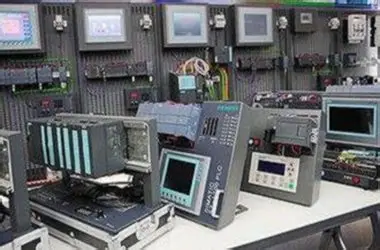
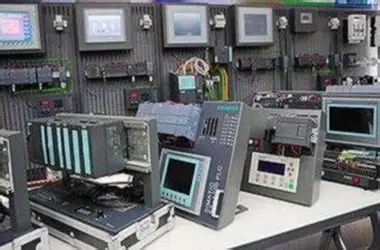
Siemens S7 400H

The Need for Uninterrupted Control

In power generation, petrochemical refining, metallurgy, and water treatment, control system failures are not merely inconvenient—they can be catastrophic. A single CPU fault can halt an entire production line, leading to significant financial losses and potential safety hazards. This is where redundant control systems come into play. The Siemens S7-400H is a flagship member of the SIMATIC S7-400 family, engineered specifically for applications that demand the highest levels of availability and fault tolerance[reference:0][reference:1].

Unlike software-based redundancy solutions that may have slower switching times, the S7-400H employs a hardware-based high-availability architecture with special firmware that fully manages redundancy[reference:2]. Yueyang Tongtu E-commerce Co., Ltd. has been supplying imported automation systems and spare parts for years, offering genuine, competitively priced S7-400H units from its extensive inventory. This article provides an overview of the system's architecture, specifications, and the value it brings to critical industrial processes.


How Hardware Redundancy Works?

The Siemens S7-400H is not a single controller but a coordinated system comprising two central processing units (CPUs) operating in a hot-standby configuration[reference:3]. The system is built on a special segmented rack (UR2-H) or two separate racks (UR1/UR2)[reference:4]. The two CPUs are linked via fiber optic cables, enabling real-time data and program synchronization[reference:5][reference:6].

In normal operation, one CPU acts as the master, actively executing the control program, while the other runs in standby mode, continuously updated with the same data. Should the master CPU fail—due to a power loss, hardware fault, or even a program error—the standby CPU automatically takes over. This switchover, known as "bumpless" or "no-disturbance" switching, occurs in less than 100 milliseconds, ensuring that the process continues without interruption and no data is lost[reference:7]. This is a critical advantage over software redundancy, which may not offer such fast and seamless switching[reference:8].


Technical Specifications

The Siemens S7-400H series includes several CPU models to suit different performance requirements. Below is a summary of the key specifications for the commonly available H-CPUs.

CPU Model Work Memory Processing Speed Interfaces
CPU 412-5H 1 MB - MPI/DP + PROFINET (2-port switch)
CPU 414-5H 4 MB 15 ns (bit) MPI/DP + PROFINET (2-port switch)
CPU 416-5H 16 MB - MPI/DP + PROFINET (2-port switch)
CPU 417-5H 32 MB 62.5 ns (bit) MPI/DP + PROFINET (2-port switch)

A typical S7-400H system consists of two H-CPUs, two power supply modules (PS), backup batteries, and synchronization modules with fiber optic cables[reference:9]. Optional communication modules like the CP443-1 (Industrial Ethernet) or CP443-5 (PROFIBUS DP) can be added for enhanced connectivity. A single station can support up to 256 I/O devices, making it suitable for large-scale automation projects.


Key Features and Performance Advantages

The Siemens S7-400H offers several distinct features that make it the preferred choice for high-availability applications.

Hardware-Based Redundancy

The system's redundancy is built into the hardware and firmware, ensuring rapid and reliable switchover without the need for complex programming. This hardware-based approach is more robust than software redundancy and is recommended when fast switching times must be guaranteed[reference:10].

High-Speed Synchronization

The fiber optic connection between CPUs ensures fast and reliable data synchronization, enabling the standby CPU to take over instantly. Synchronization cables can be up to 10 kilometers long, allowing the two CPUs to be physically separated in different locations[reference:11].

Hot-Swapping and Online Configuration

The S7-400H supports hot-swapping of modules, allowing faulty components to be replaced without shutting down the system[reference:12]. It also permits online hardware configuration changes, minimizing downtime during system modifications.

Safety Integration

The H-CPUs are fully compatible with the S7-400F safety system, enabling the implementation of Safety Integrity Level (SIL) 3 applications. This makes the S7-400H suitable for both standard automation and safety-related tasks, reducing the need for separate safety controllers[reference:13].

Comprehensive Certifications

The system meets CE standards, holds UL/cUL safety certifications for the North American market, and has passed TÜV certification for SIL 3 and AK6 safety integrity levels based on the IEC 61508 standard. This ensures compliance with international safety and quality requirements.


Applications Across Critical Industries

The Siemens S7-400H is widely deployed in sectors where continuous, reliable operation is paramount. Typical applications include:

Power generation – Controlling turbines, boilers, and grid interconnection systems where unplanned outages can cause widespread disruptions.

Petrochemical and refining – Managing complex processes in oil refineries and chemical plants, where process interruptions can lead to safety hazards and product loss[reference:14].

Metallurgy – Operating blast furnaces, rolling mills, and continuous casting lines that must run 24/7[reference:15].

Water and wastewater treatment – Ensuring uninterrupted operation of municipal water supply and treatment facilities[reference:16].

Process industry DCS and SIS – Serving as the core of Distributed Control Systems (DCS) and Safety Instrumented Systems (SIS) in factory automation[reference:17].

Mining and material handling – Controlling conveyors, crushers, and processing equipment in harsh environments[reference:18].


The Yueyang Tongtu Advantage

Sourcing high-end automation components like the Siemens S7-400H requires a supplier with deep inventory, technical expertise, and a commitment to quality. Yueyang Tongtu E-commerce Co., Ltd. has been a specialist in imported automation systems and spare parts for years, offering:

Genuine, brand-new parts – All S7-400H CPUs and components are sourced from reputable channels, ensuring authenticity and reliability.

Competitive pricing – By maintaining a large inventory of surplus and discontinued parts, Tongtu can offer factory-direct pricing that is often lower than traditional distributors.

Global shipping – With exports to more than 50 countries, the company has a robust logistics network to ensure timely delivery.

Expert support – The company's team of engineers and sales professionals can assist with product selection, configuration, and troubleshooting.


Frequently Asked Questions

Q: What is the switchover time between the master and standby CPU in an S7-400H system?

A: The switchover time is less than 100 milliseconds, ensuring a bumpless transfer that does not disturb the process or cause data loss[reference:19].

Q: Can the S7-400H be configured in TIA Portal?

A: No. The S7-400H series CPUs are not supported in TIA Portal. They must be configured using STEP 7 Classic (e.g., V5.5+) or within the PCS 7 process control system.

Q: What memory cards are supported by the S7-400H?

A: Both RAM cards and FLASH cards are supported. RAM cards lose the program after power-off and require a backup battery to retain data. FLASH cards retain the program without power but still need a backup battery for retaining bit memory, timers, and other data.

Q: Is the S7-400H suitable for use in harsh environments?

A: Yes, with proper selection. The standard S7-400H can be used in G3 corrosion protection environments. For more severe conditions, the SIPLUS series 400H products are recommended. For high-altitude applications above 3000 meters, the SIPLUS series must be used.

Q: Does the S7-400H support safety functions?

A: Yes. The H-CPUs are fully compatible with the S7-400F safety system, enabling SIL 3 safety applications. The system has been TÜV-certified for SIL 3 and AK6 safety integrity levels.

Q: What is the maximum communication distance between the two H-CPUs?

A: The synchronization fiber optic cables can be up to 10 kilometers long, allowing the two CPUs to be located far apart[reference:20].


Conclusion

The Siemens S7-400H remains a cornerstone of high-availability automation in power, petrochemical, metallurgical, and process industries. Its hardware-based redundancy, rapid switchover, and robust safety features make it an essential component for critical control systems. For businesses seeking a reliable source for this high-end PLC, Yueyang Tongtu offers genuine parts, competitive pricing, and expert support. To inquire about the S7-400H or other automation components, contact the Yueyang Tongtu team—they are ready to assist with your industrial control requirements.

Related News
Leave me a message
X
We use cookies to offer you a better browsing experience, analyze site traffic and personalize content. By using this site, you agree to our use of cookies.Privacy Policy
RejectAccept